I still remember quite vividly the high school PHSE lesson we were taught regarding nasiha. Nasiha means giving good counsel and advice. We concluded by saying that nasiha should be given thoughtfully and honestly, so as not to embarass the person, but to sincerely advise them on something. We were always taught that the believers are like mirrors to one another, and should correct each other's faults (in an appropriate manner).
So why is it that now, I don't receive nasiha from my sisters in Islam? Why am I scared to give nasiha? I know there's a fine line between being judgmental and sincerely giving advice, but sometimes I feel I should say something but I don't know how. I feel it's not my place to say anything, because the general consensus seems to be that if you even try to kindly correct somebody, they'll jump to conclusions and think you're judging them. It's even harder to give nasiha to a "stranger" or somebody you don't really know.
Of course, Nasiha doesn't have to be regarding religion, it can relate to anything. I often hear that if you see another believer doing something wrong, it's your duty to give nasiha, because perhaps the other person isn't aware of what they're doing is wrong, plus, you'll get questioned if you didn't try to help them.
Now, I'm not saying that you should go all Haram Police on people and issue fatwas left, right and centre. There's a difference between saying "that's haram and you're going straight to hell!" and "look, as your fellow sister in Islam, I'm concerned that what you're doing is wrong." I'm also not saying that you should deliberately set out to correct other people's faults instead of your own, in fact, you should do the opposite. But a little, kind, sisterly advice wouldn't go amiss.
I'm interested to know what you think: have you given nasiha and what's your stance on this issue?
Showing posts with label Islam. Show all posts
Showing posts with label Islam. Show all posts
Monday, 26 December 2011

Thursday, 1 September 2011
Eid Ul Fitr 2011: in pictures
Eid Mubarak (even though it's a little late) to my Muslim followers, readers & one-time-stumble-uponers! Hope you all had a blessed day.
My Eid was pleasant, and like last year, (and so I don't bore you with small details), this blog post is all about pictures:
THE FOOD
The best part of the day. Undoubtedly.


THE CLOTHES
Second-best thing about Eid.


THE MENDHI
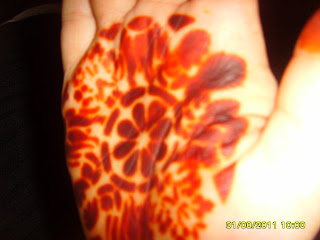


And...
This is the part where I played the game called "how many pictures can I take and make them interesting but NOT show my face?" LOL. enjoy...


 Hope you all had a wonderful day!!
My Eid was pleasant, and like last year, (and so I don't bore you with small details), this blog post is all about pictures:
THE FOOD
The best part of the day. Undoubtedly.

 |
| Chicken Tikka |
 |
| Samosas & Kebabs |
 |
| Biryani |

 |
| Eid Cake!! |


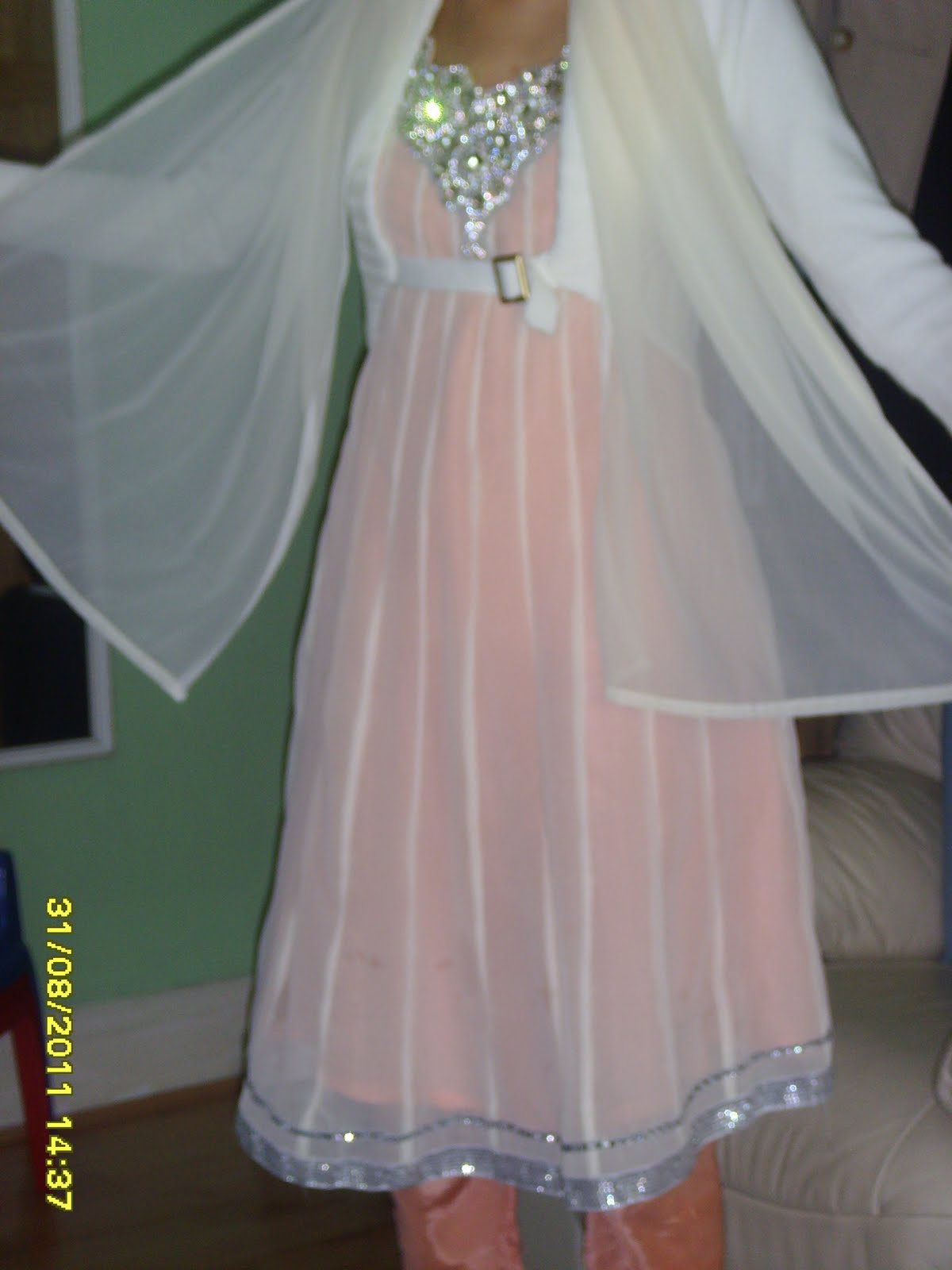
THE CLOTHES
Second-best thing about Eid.
 |
| The baby brother wore a little cute suit! |

 |
| What my elder sister wore |

 | |
| what my younger sister wore |
 |
| What I wore |
 |
| The neck |


And...
This is the part where I played the game called "how many pictures can I take and make them interesting but NOT show my face?" LOL. enjoy...


Sunday, 31 July 2011
Ramadan Mubarak!
Wishing you 1 month of Ramadan, 4 weeks of Barakah, 30 days of forgiveness, 720 hours of guidance, 43,200 minutes of purification and 2,592,000 seconds of Noor! Ramadan Mubarak to all my Muslim followers :)


On the Day of Judgement, "Fasting will say: O My Lord I prevented him from food & desires so accept my intercession for him." (Ahmad)
"...And it is better for you that ye fast, if ye only knew." (2:184)
Ramadan is a month whose beginning is mercy, whose middle is forgiveness, & whose end is freedom from the fire of hell.
“O ye who believe! Fasting is prescribed to you as it was prescribed to those before you, that ye may (learn) self-restraint.” (2:183)
Ramadan is a blessed month containing a night which is better than a thousand months.
"Fasting is a shield with which a servant protects himself from the Fire." [Ahmad, Saheeh]
"Fasting is prescribed for you as it was prescribed for those before you, that you may attain taqwaa." [2:183]
Saturday, 9 April 2011
Islam, Culture and "rules"
I've been meaning to blog about this for a while, and recently, I saw a tweet that contained a video that got me thinking.
The video is from Jamie's Dream School, in which he got some famous people to teach some kids, in an attempt to make lessons more interesting and interactive. I think that's what the gist was, I never watched any of it though. Anyway, here is the video:
The issues raised in this video:
The aim of this lesson was to teach the children what humans do to each other in the name of religion and belief. He tries to explain to the children why humans do this, and uses the example of burning. This was rife in England when there was a divide between the Protestants and the Catholics.
The whole debate and the points raised during the whole lesson are very thought-provoking and controversial. The bit I want to draw your attention to is 14:44 onwards.
The teacher, David Starkey, repeatedly singles out a pupil named Aysha, of Bengali ethnicity. In this incident, he asks her how important religion is in Bangladesh and the impact it has on her. She explains that religion is very important in Bangladesh and says "decisions revolve around it." She describes it as being very strict, and a set of rules of certain things she can't do, as she is not allowed to go out without a headscarf, eat pork, she can't do certain things, or see certain people.
A pupil mentions "you can't get married to other people, can you?" She doesn't answer, as another pupil asks "do you still do those things now?"
She replies by saying "No, I'm not strict, but my Mum is." Starkey picks up on this and comments that her religion produces great tension within the family, and Aysha agrees.
She then says "obviously it all changes, my Mum's old fashioned, so the things that she does, I won't do, she lives in a different time than me."
Starkey says "You could say (I don't want to be rude), that she's from the middle ages." And Aysha agrees.
Starkey also mentions that the importance of religion in the Islamic world is huge, and for Americans, Christianity is also massively important, and stems the Democrat-Republican political divide.
The lesson concludes that humans either hurt each other, or allow themselves to be hurt by others for two reasons - :
1) They want to be a martyr and die for their cause i.e. their religion
2) They will not denounce their beliefs because they feel what they believe IS the truth
My thoughts on this video:
There is a massive culture-religion conflict amongst Muslims today, particularly those of Asian ethnicities. They see Islam as something cultural, they view praying, fasting, and wearing the headscarf as something that their parents, relatives and families do "back home", and they see such practises as incompatible with Western society. The reason why they see such practises as incomaptible is because many of their relatives or even their parents themselves stop practising Islam once they come to the UK (or wherever) for a multitude of reasons. Of course, when they were in a Muslim country, it would have been easier to pray or fast, since everyone did it, and there was a sense of community. Those who migrate to the UK can feel isolated, and feel that they have lost their roots; and ultimately, their religion that went with it.
All humans feel the need to have a sense of belonging, and most of us do want to "fit in". So, when our parents came from the Hindo-Pak countries, at first, they were completely alien to the culture and society of the UK. Racism was rife in the UK, with the rise of the "punk-rock" culture and the skin-heads, and the word "Paki" was brandished upon our parents, and they were told to go back to where they came from. They never felt a need to fit in, as they always knew they would be different, even if they shortened their name and wore western clothes. However, their children, us, the next generation, being born in the UK and with British Identities and the infamous "laal passports" felt a need to fit in and integrate with our peers. We wear their clothes, we listen to their music, we watch their TV, so we are in essence, British. But what does this mean to us?
I think Aysha's problem is a problem probably all of us (myself included) faced during our teens. Due to a language barrier, our parents failed to pass the message of Islam on to us, and because some of them stopped practising when they came here, we didn't have a clue how Islam was part of our lives. I was fortunate in that I went to an Islamic High School , I daren't think what would have happened to me otherwise. Parents have a duty to teach their children which practises are Islam, and which are culture, otherwise they'll just assume everything is culture.
There is also a sense of fear amongst Muslims at present. Fear of practising their religion to the fullest extent, because they do not want to be brandished as a "terrorist." Many Muslims from Asian cultures may also feel that Islam is out of their reach, due to the language barrier of not being able to understand Arabic. They read the Qur'an like robots, swaying back and forth in a droning tone, and memorise huge chunks. This is all well and good, but the Qur'an is the literal word of God, and you need to be able to understand what he's saying in order to receive the wisdom and guidance. There are English (and other) translations of the Qur'an that are widely available, and I think it's a duty upon us as non-Arabs to attempt to understand it as best as we can.
Just the other day, I saw a Mother and Daughter get on the bus. The Mum was wearing traditional Shalwar Kameez, with the dupatta pinned securely on her head and had an Asian accent, and the daughter was wearing jeans and a dress. The girl was young, so I'm not judging her in a religious sense, she was only 11, but it just made me think about the cultural clashes between parents who were born and raised in different countries and societies to those of their children.
Aysha feels Islam is a set of rules of things you can't do. It's interesting that she says that, because the society we are moving into, that feels more and more secular, is quick to denounce any kind of religion because of the tension it creates and the freedom it restricts. At uni, I mainly hang around with two Chinese girls- one is very understanding and asks lots of questions, the other asks but when I reply is very shocked and sees my religion as Aysha described- a set of rules and things you can't do. Some say that "rules are made to be broken", and whilst this may be true, these aren't man-made rules, these are instructions from God with divine wisdom behind them. It can be hard for us to ascertain these wisdoms, as mere mortals, but for example, the hijab is meant to be worn for a mutltitude of reasons- the main ones being to ward off evil, to enable modesty, to protect a woman's beauty so that she isn't objectified and seen as a sex-object. The instructions that Allah gives us are not so that we cannot live normally, or that so we are restricted or burdened in any way, there is wisdom behind each thing we can do, and each thing we cannot do.
I pray that Aysha is guided to the right path, and is enabled to see Islam for what it really is, before it's too late, inshaAllah. I want to leave with Surah Al-Kafirun, to reflect upon.

The video is from Jamie's Dream School, in which he got some famous people to teach some kids, in an attempt to make lessons more interesting and interactive. I think that's what the gist was, I never watched any of it though. Anyway, here is the video:
The issues raised in this video:
The aim of this lesson was to teach the children what humans do to each other in the name of religion and belief. He tries to explain to the children why humans do this, and uses the example of burning. This was rife in England when there was a divide between the Protestants and the Catholics.
The whole debate and the points raised during the whole lesson are very thought-provoking and controversial. The bit I want to draw your attention to is 14:44 onwards.
The teacher, David Starkey, repeatedly singles out a pupil named Aysha, of Bengali ethnicity. In this incident, he asks her how important religion is in Bangladesh and the impact it has on her. She explains that religion is very important in Bangladesh and says "decisions revolve around it." She describes it as being very strict, and a set of rules of certain things she can't do, as she is not allowed to go out without a headscarf, eat pork, she can't do certain things, or see certain people.
A pupil mentions "you can't get married to other people, can you?" She doesn't answer, as another pupil asks "do you still do those things now?"
She replies by saying "No, I'm not strict, but my Mum is." Starkey picks up on this and comments that her religion produces great tension within the family, and Aysha agrees.
She then says "obviously it all changes, my Mum's old fashioned, so the things that she does, I won't do, she lives in a different time than me."
Starkey says "You could say (I don't want to be rude), that she's from the middle ages." And Aysha agrees.
Starkey also mentions that the importance of religion in the Islamic world is huge, and for Americans, Christianity is also massively important, and stems the Democrat-Republican political divide.
The lesson concludes that humans either hurt each other, or allow themselves to be hurt by others for two reasons - :
1) They want to be a martyr and die for their cause i.e. their religion
2) They will not denounce their beliefs because they feel what they believe IS the truth
My thoughts on this video:
There is a massive culture-religion conflict amongst Muslims today, particularly those of Asian ethnicities. They see Islam as something cultural, they view praying, fasting, and wearing the headscarf as something that their parents, relatives and families do "back home", and they see such practises as incompatible with Western society. The reason why they see such practises as incomaptible is because many of their relatives or even their parents themselves stop practising Islam once they come to the UK (or wherever) for a multitude of reasons. Of course, when they were in a Muslim country, it would have been easier to pray or fast, since everyone did it, and there was a sense of community. Those who migrate to the UK can feel isolated, and feel that they have lost their roots; and ultimately, their religion that went with it.
All humans feel the need to have a sense of belonging, and most of us do want to "fit in". So, when our parents came from the Hindo-Pak countries, at first, they were completely alien to the culture and society of the UK. Racism was rife in the UK, with the rise of the "punk-rock" culture and the skin-heads, and the word "Paki" was brandished upon our parents, and they were told to go back to where they came from. They never felt a need to fit in, as they always knew they would be different, even if they shortened their name and wore western clothes. However, their children, us, the next generation, being born in the UK and with British Identities and the infamous "laal passports" felt a need to fit in and integrate with our peers. We wear their clothes, we listen to their music, we watch their TV, so we are in essence, British. But what does this mean to us?
I think Aysha's problem is a problem probably all of us (myself included) faced during our teens. Due to a language barrier, our parents failed to pass the message of Islam on to us, and because some of them stopped practising when they came here, we didn't have a clue how Islam was part of our lives. I was fortunate in that I went to an Islamic High School , I daren't think what would have happened to me otherwise. Parents have a duty to teach their children which practises are Islam, and which are culture, otherwise they'll just assume everything is culture.
There is also a sense of fear amongst Muslims at present. Fear of practising their religion to the fullest extent, because they do not want to be brandished as a "terrorist." Many Muslims from Asian cultures may also feel that Islam is out of their reach, due to the language barrier of not being able to understand Arabic. They read the Qur'an like robots, swaying back and forth in a droning tone, and memorise huge chunks. This is all well and good, but the Qur'an is the literal word of God, and you need to be able to understand what he's saying in order to receive the wisdom and guidance. There are English (and other) translations of the Qur'an that are widely available, and I think it's a duty upon us as non-Arabs to attempt to understand it as best as we can.
Just the other day, I saw a Mother and Daughter get on the bus. The Mum was wearing traditional Shalwar Kameez, with the dupatta pinned securely on her head and had an Asian accent, and the daughter was wearing jeans and a dress. The girl was young, so I'm not judging her in a religious sense, she was only 11, but it just made me think about the cultural clashes between parents who were born and raised in different countries and societies to those of their children.
Aysha feels Islam is a set of rules of things you can't do. It's interesting that she says that, because the society we are moving into, that feels more and more secular, is quick to denounce any kind of religion because of the tension it creates and the freedom it restricts. At uni, I mainly hang around with two Chinese girls- one is very understanding and asks lots of questions, the other asks but when I reply is very shocked and sees my religion as Aysha described- a set of rules and things you can't do. Some say that "rules are made to be broken", and whilst this may be true, these aren't man-made rules, these are instructions from God with divine wisdom behind them. It can be hard for us to ascertain these wisdoms, as mere mortals, but for example, the hijab is meant to be worn for a mutltitude of reasons- the main ones being to ward off evil, to enable modesty, to protect a woman's beauty so that she isn't objectified and seen as a sex-object. The instructions that Allah gives us are not so that we cannot live normally, or that so we are restricted or burdened in any way, there is wisdom behind each thing we can do, and each thing we cannot do.
" But perhaps you hate a thing and it is good for you; and perhaps you love a thing and it is bad for you. And Allah Knows, while you know not." (2:216)
I pray that Aysha is guided to the right path, and is enabled to see Islam for what it really is, before it's too late, inshaAllah. I want to leave with Surah Al-Kafirun, to reflect upon.

Sunday, 20 February 2011
Why does it take us to see something wrong with somebody else to be thankful for what we have?
This isn't really a blog "post" as such- it's just a thought. I was watching a video yesterday about some people who suffered abuse (of all kinds) as a child and before I went to bed, I thanked Allah that I had never been abused and that I did not have a traumatic childhood. I'm not gonna sugar-coat it, there were a few smacks here and there, but Alhamdulillah, nothing really bad.
Then it got me thinking: why do we have to hear about someone being abused, or see someone blind or in a wheelchair to be thankful? We are such tiny specs on this Earth, and we have no wisdom compared to Almighty God, and as much as we try, we cannot make a list of everything we ought to be thankful for. We are blessed in so many ways we don't even realise, and we cannot even fathom all of them. But why does it take for us to notice someone who doesn't have something for us to be thankful that we do have that something.
Some people think that Allah has made people disabled etc so that able-bodied people will look at them and thank Allah that they are not like that. This may or may not be true, but I seem to think that it is true. Since Allah has created us, and knows us, inside out, he knows that we will not appreciate what we have until we see those who are without.
But then, SubhanAllah, have you notice that most (not all ) people with any health conditions (may or may not be disabilities) are just so much stronger within themselves and seem to be happier. It's like how I was waching a Channel 4 documentary named "Beauty and the Beast"- and there was a guy on there with a facial disfigurement. And he saw past the superficial ideology of society that your face and looks are the most important, and instead saw the importance of inner beauty.
And in the same way, I think my condition, hypothyroidism, has also made me see past the society's "size zero we-all-wanna-be-thin" conditioning, and accept that we all come in different shapes and sizes. I used to feel so unconfident within my skin, thinking people treated me differently because I was fat. Now, I couldn't care less, because I'm happy with the way I am, and I know that I am beautiful on the inside. I also know it takes people a while to realise this, and to see past the stereotypes.
So I want you to use me as an example to be thankful. I want you to be thankful and feel blessed that you have a normal, functioning thyroid. That you can lose weight quicker than me, that you can eat what you want and not have to worry about gaining weight. Not because it's so difficult for me, or that I want your sympathy, because although at first it was difficult, it has become so much easier. Just because I believe God made me this way so that you would be thankful for your thyroid.
Then it got me thinking: why do we have to hear about someone being abused, or see someone blind or in a wheelchair to be thankful? We are such tiny specs on this Earth, and we have no wisdom compared to Almighty God, and as much as we try, we cannot make a list of everything we ought to be thankful for. We are blessed in so many ways we don't even realise, and we cannot even fathom all of them. But why does it take for us to notice someone who doesn't have something for us to be thankful that we do have that something.
Some people think that Allah has made people disabled etc so that able-bodied people will look at them and thank Allah that they are not like that. This may or may not be true, but I seem to think that it is true. Since Allah has created us, and knows us, inside out, he knows that we will not appreciate what we have until we see those who are without.
But then, SubhanAllah, have you notice that most (not all ) people with any health conditions (may or may not be disabilities) are just so much stronger within themselves and seem to be happier. It's like how I was waching a Channel 4 documentary named "Beauty and the Beast"- and there was a guy on there with a facial disfigurement. And he saw past the superficial ideology of society that your face and looks are the most important, and instead saw the importance of inner beauty.
And in the same way, I think my condition, hypothyroidism, has also made me see past the society's "size zero we-all-wanna-be-thin" conditioning, and accept that we all come in different shapes and sizes. I used to feel so unconfident within my skin, thinking people treated me differently because I was fat. Now, I couldn't care less, because I'm happy with the way I am, and I know that I am beautiful on the inside. I also know it takes people a while to realise this, and to see past the stereotypes.
So I want you to use me as an example to be thankful. I want you to be thankful and feel blessed that you have a normal, functioning thyroid. That you can lose weight quicker than me, that you can eat what you want and not have to worry about gaining weight. Not because it's so difficult for me, or that I want your sympathy, because although at first it was difficult, it has become so much easier. Just because I believe God made me this way so that you would be thankful for your thyroid.
Saturday, 12 February 2011
Islamic Society Pre-Valentine's Talk
Most ISOC's hold a "girls and boys" talk that they schedule for around Valentine's Day. Ours was held this week, (on Tuesday), so this post is slightly overdue (!) This post is a brief description of what was said in the talk:
The Sheikh began by explaining that there are two types of desire: sexual desire (desire of the private parts) and desire of the stomach- which includes eating as well as fulfilling all worldly desires. Allah (swt) has placed a certain amount of lust and desire inside every human; to different degrees. In the same way, Allah has placed emotions such as anger within all humans, but to different extents too. It is worthless trying to eliminate completely such feelings, however, what is achievable is to control them in the best way. Because all Humans are instilled with such desire, we should not feel shame that we feel the desires, but what we should be ashamed of is how we choose to act on them.
He mentioned how in Surah Al-Fatihah, we pray that Allah keeps us on the straight path (seerat al-mustaqeem). For Muslims, the straight path is the moderate path, between the two extremes. Allah has created Islam as a moderate religion, in order that no burden may be placed upon its followers.
In relation to sexual desire, he went into detail the two extremes that there are, and Islam's view on it. On the one extreme, we have celibacy which is practiced by Catholic Nuns or Christian Priests. They follow a complete no-sex policy as they devote their lives to God. Although this is not advocated by Islam, many famous Scholars and Muhaddith (those who teach Hadith), such as An-Nawawi who compiled the famous "40 Hadiths" and many more remained unmarried as they devoted their lives to Islaam.
On the other hand, we have a scenario which society is (unfortuantely) becoming now, in which there is promiscuity and wide-spread sleeping around in which people will do anything (I won't go into detail) in order to fulfil their sexual desires.
On the moderate, Islamic path, sex is permitted within marital relationships only. It is considered as a Sadaqah, and the couple get rewarded. One of the Sahabah (companions of the Prophet) asked the Prophet (saws) as he was amazed that it is rewarded. The Prophet (saws) answered that when one commits Zina (sexual relations outside marriage), you are punished and gain sins. So surely, the oppposited, permitted relations would be rewarded.
He briefly also mentioned that the youth of today are under the impression that they are allowed to mess around now, and that they will change later once they settle down and get married. He warned us that many studies have been conducted of those who have certain habits in their teenage years and are unable to change, or remain faithful even once they are married. So now is the time to change and to become the person you want to be.
Some questions were asked, along the lines of "I'm in a relationship now, what should I do." He answered saying, either end it now and tell the other person it's over, or, if you can, then get your parents involved and get married. He was very understaning, and mentioned how he knows that parents- especially Asian parents can be a hindrance when young people wish to get married. Someone also asked what if you have already committed zina already, what should you do? He outlined the steps of Forgiveness which are firstly you should be sincere and understand what you have done is wrong, secondly you should pray to Allah that he forgives you and thirdly you should make a pledge never ever to commit that sin again. You should remember that Allah is oft-forgiving, most merciful.
That's about it really. Any mistakes in the above text are my own, and inshaAllah I hope you benefited from it.
Here are some related videos which I watched a while back that I think are relevant, watch all three parts inshaAllah:
The Sheikh began by explaining that there are two types of desire: sexual desire (desire of the private parts) and desire of the stomach- which includes eating as well as fulfilling all worldly desires. Allah (swt) has placed a certain amount of lust and desire inside every human; to different degrees. In the same way, Allah has placed emotions such as anger within all humans, but to different extents too. It is worthless trying to eliminate completely such feelings, however, what is achievable is to control them in the best way. Because all Humans are instilled with such desire, we should not feel shame that we feel the desires, but what we should be ashamed of is how we choose to act on them.
He mentioned how in Surah Al-Fatihah, we pray that Allah keeps us on the straight path (seerat al-mustaqeem). For Muslims, the straight path is the moderate path, between the two extremes. Allah has created Islam as a moderate religion, in order that no burden may be placed upon its followers.
In relation to sexual desire, he went into detail the two extremes that there are, and Islam's view on it. On the one extreme, we have celibacy which is practiced by Catholic Nuns or Christian Priests. They follow a complete no-sex policy as they devote their lives to God. Although this is not advocated by Islam, many famous Scholars and Muhaddith (those who teach Hadith), such as An-Nawawi who compiled the famous "40 Hadiths" and many more remained unmarried as they devoted their lives to Islaam.
On the other hand, we have a scenario which society is (unfortuantely) becoming now, in which there is promiscuity and wide-spread sleeping around in which people will do anything (I won't go into detail) in order to fulfil their sexual desires.
On the moderate, Islamic path, sex is permitted within marital relationships only. It is considered as a Sadaqah, and the couple get rewarded. One of the Sahabah (companions of the Prophet) asked the Prophet (saws) as he was amazed that it is rewarded. The Prophet (saws) answered that when one commits Zina (sexual relations outside marriage), you are punished and gain sins. So surely, the oppposited, permitted relations would be rewarded.
He briefly also mentioned that the youth of today are under the impression that they are allowed to mess around now, and that they will change later once they settle down and get married. He warned us that many studies have been conducted of those who have certain habits in their teenage years and are unable to change, or remain faithful even once they are married. So now is the time to change and to become the person you want to be.
Some questions were asked, along the lines of "I'm in a relationship now, what should I do." He answered saying, either end it now and tell the other person it's over, or, if you can, then get your parents involved and get married. He was very understaning, and mentioned how he knows that parents- especially Asian parents can be a hindrance when young people wish to get married. Someone also asked what if you have already committed zina already, what should you do? He outlined the steps of Forgiveness which are firstly you should be sincere and understand what you have done is wrong, secondly you should pray to Allah that he forgives you and thirdly you should make a pledge never ever to commit that sin again. You should remember that Allah is oft-forgiving, most merciful.
That's about it really. Any mistakes in the above text are my own, and inshaAllah I hope you benefited from it.
Here are some related videos which I watched a while back that I think are relevant, watch all three parts inshaAllah:
Saturday, 5 February 2011
Is it just our "turn"?
I can't remember who brought the subject up, or even how we got talking about it. He leant back in his swivel chair, ran his fingers through his moustache and said:
"Well if you look at history, at one point Black people were being persecuted in America, and there was the KKK and the civil war. Then a while afterwards, there was the holocaust in Germany as the Jews were being discriminated against. And now, as awful as it is, there's Islamophobia. It's unfortunate because it makes life much more difficult for you, as a Muslim. But maybe it's just your turn."
I sat back in my chair as I took in his words. They sounded very intelligent, very logical and thought through. But was it true? Is this just our "turn"?
I nodded and said: "For what it's worth, I hope you're right. I hope it is just our turn and it passes soon."
I was on work experience at the time, at a local hospital, when I was pursuing Medicine as a possible career. He, Dr Clark, was a cardiologist.
His words came back to me recently, as I remembered this incident. I mainly remember them at the gym, because I get all sorts of looks (mainly from men), being the only hijabi, fully covered girl in the gym. Most of the time I try to ignore it, but sometimes it can get annoying. This week, I went into the changing rooms in the gym and saw a girl with her straighteners plugged in, doing her hair. I laughed in my head and though "gosh, I've never seen that before!" I just found it really amusing. Then it occurred to me that people probably thought the same thing when they see me in the gym. And I was guilty of the same behaviour imposed upon me. The irony was quite baffling.
I was recently listening to a Radio 4 Programme about Islamophobia (which is still available and is a recommended listen- only 30 mins). It highlighted many issues facing Muslims today, especially our portrayal within the media. There are always negative, over-exaggerated stories. Even to the extent that the words Islam or Terrorist are buzzwords used to sell commercial newspapers. But does any of this help with community cohesion and integration?
Also, Baroness Sayeeda Warsi (Conservatives) made a recent comment that prejudice against Muslims is seen as "normal" and socially acceptable. Watch the video/read article here. She makes the point that people label all Muslims as extremists due to the actions of a minority.
Personally, I believe the Islamophobia all began post 9/11. Before then, when my Mum was growing up in Britian, there was a great amount of racism- against Pakistani's. But it was not an attack on religion. I'm always thankful that I live in the UK and not the US, I imagine it must have been harder for American Muslims post 9-11. At the time, I went to an all-girls Islamic School. Nothing major happened, but we used to get called "taliban" etc, and it was pretty difficult because prejudice was so rife. Just when we thought things had calmed down, 7/7 hapened, and we were back to square one. Now, at university, things are fine. I wouldn't say I experience any kind of "Islamophobia" now, other than in the gym, but I think that's more of a stereotype thing- because they're just not used to seeing a hijabi there.
I often do wish people would stop judging me because of a piece of cloth on my head. That's the only thing that physically identifies me as a Muslim. But it's all about educating. I've learnt that non-Muslims are much more tolerant when they are explained the truth behind the headlines. They are at the end of the day human, like us, and are actually very inquisitive. They ask about halal meat (mainly), why I wear the headscarf, why I don't date etc. At the end of the day, all they want are simple answers. And it's up to us to educate ourselves and prepare answers so that we're ready to educate them.
What do you think, is it just our "turn"?
"Well if you look at history, at one point Black people were being persecuted in America, and there was the KKK and the civil war. Then a while afterwards, there was the holocaust in Germany as the Jews were being discriminated against. And now, as awful as it is, there's Islamophobia. It's unfortunate because it makes life much more difficult for you, as a Muslim. But maybe it's just your turn."
I sat back in my chair as I took in his words. They sounded very intelligent, very logical and thought through. But was it true? Is this just our "turn"?
I nodded and said: "For what it's worth, I hope you're right. I hope it is just our turn and it passes soon."
I was on work experience at the time, at a local hospital, when I was pursuing Medicine as a possible career. He, Dr Clark, was a cardiologist.
His words came back to me recently, as I remembered this incident. I mainly remember them at the gym, because I get all sorts of looks (mainly from men), being the only hijabi, fully covered girl in the gym. Most of the time I try to ignore it, but sometimes it can get annoying. This week, I went into the changing rooms in the gym and saw a girl with her straighteners plugged in, doing her hair. I laughed in my head and though "gosh, I've never seen that before!" I just found it really amusing. Then it occurred to me that people probably thought the same thing when they see me in the gym. And I was guilty of the same behaviour imposed upon me. The irony was quite baffling.
I was recently listening to a Radio 4 Programme about Islamophobia (which is still available and is a recommended listen- only 30 mins). It highlighted many issues facing Muslims today, especially our portrayal within the media. There are always negative, over-exaggerated stories. Even to the extent that the words Islam or Terrorist are buzzwords used to sell commercial newspapers. But does any of this help with community cohesion and integration?
Also, Baroness Sayeeda Warsi (Conservatives) made a recent comment that prejudice against Muslims is seen as "normal" and socially acceptable. Watch the video/read article here. She makes the point that people label all Muslims as extremists due to the actions of a minority.
Personally, I believe the Islamophobia all began post 9/11. Before then, when my Mum was growing up in Britian, there was a great amount of racism- against Pakistani's. But it was not an attack on religion. I'm always thankful that I live in the UK and not the US, I imagine it must have been harder for American Muslims post 9-11. At the time, I went to an all-girls Islamic School. Nothing major happened, but we used to get called "taliban" etc, and it was pretty difficult because prejudice was so rife. Just when we thought things had calmed down, 7/7 hapened, and we were back to square one. Now, at university, things are fine. I wouldn't say I experience any kind of "Islamophobia" now, other than in the gym, but I think that's more of a stereotype thing- because they're just not used to seeing a hijabi there.
I often do wish people would stop judging me because of a piece of cloth on my head. That's the only thing that physically identifies me as a Muslim. But it's all about educating. I've learnt that non-Muslims are much more tolerant when they are explained the truth behind the headlines. They are at the end of the day human, like us, and are actually very inquisitive. They ask about halal meat (mainly), why I wear the headscarf, why I don't date etc. At the end of the day, all they want are simple answers. And it's up to us to educate ourselves and prepare answers so that we're ready to educate them.
What do you think, is it just our "turn"?
Saturday, 11 September 2010
Eid ul fitr 2010: in pictures
 |
| My outfit; Indigo Shalwar kameez with sequin detail on dupatta |
 | ||
| Closer view of the dupatta |
 |
| and again... |
 |
| Filligree bangle from New Look to Accessorise |
 |
| Shoes! From New Look's wide fit range |

 |
| "Me bandage!!" |
 | ||
| Lil sister's outfit |
 |
| Present I got lil sis. She wouldn't stop reading it! |
 | |
| My baby brother's outfit, he's going to be one tomorrow InshaAllah! |
 | ||
| YUM! |
 |
| Pick a chocolate...any chocolate!! |

Thursday, 9 September 2010
Eid Mubarak
To all my followers, stalkers, stumble-upon-ers:

Eid Mubarak! Kum 'aam wa antum bikhair! Hope you all have an enjoyable and blessed day, InshaAllah. This Eid nasheed brings back so many high school memories for me and makes me excited for eid:
PS. once my hand has fully healed I'll be blogging all about the surgery plus presents I bought my family for Eid, InshaAllah. Stitches and bandage should be off by Monday InshaAllah. Uni starts on the 20th (freshers' week) eeeeek!!

Eid Mubarak! Kum 'aam wa antum bikhair! Hope you all have an enjoyable and blessed day, InshaAllah. This Eid nasheed brings back so many high school memories for me and makes me excited for eid:
PS. once my hand has fully healed I'll be blogging all about the surgery plus presents I bought my family for Eid, InshaAllah. Stitches and bandage should be off by Monday InshaAllah. Uni starts on the 20th (freshers' week) eeeeek!!
Thursday, 12 August 2010
Ramdan Kareem!
Yes, I'm a tad late- but better late than never! I've a few things I want to share with you.
Ramadan Wallpapers
Courtesy of Dr Zakir Naik's facebook page


Productive Ramadan
Is from the same people as Productive Muslim dot com, and is full of great tips and advice. Clicky here to go to it now :)
Muslim Aid TV Adverts
I was sent these through their recent newsletter, and I found them to be very thought-provoking especially part 1: (please watch all three parts)
How I'm feeling about Ramadan
There is a lot of excitement going about as everyone's geared up for Ramadan. Sadly, I dont seem to be feeling much expectation. I havent blogged about this but, recently, I (don't know how) but managed to get a slipped disc of my spine and have been in a lot of pain. Most of my family told me not to fast but I really wanted to as I couldnt miss out on the experience, I do love Ramadan. But I wasnt looking forward to the not being able to take painkillers every 4 hours. I almost feel rebellious because everyone has advised me against it. I wasnt super-excited I think because I didnt want to gear myself up as usually I start off Ramadan soooo good and then I slowly get tired and stop doing as much ibadah as I did on the first fast. I'm just taking each day as it comes and doing my prayers, increasing the amount of Qur'an etc I read. My aim is to finish the Qur'an but it may not happen ( I havent ever managed this as yet). More important to me is actually understanding what I read, so I'm reading a side-by-side Arabic and English translation Qur'an. I realise it may take me longer, but Inshallah I want to benefit from reading it instead of racing on just to finish it. (I hope that made sense). Mashallah today I managed to finish the first Juz'/spara so Inshallah I hope I continue to do this everyday.
Finally, I'd like to say a massive thank you/ jazakallah to all the new followers and readers :) Im loving all your comments so keep them coming xxx
Ramadan Wallpapers
Courtesy of Dr Zakir Naik's facebook page


Productive Ramadan
Is from the same people as Productive Muslim dot com, and is full of great tips and advice. Clicky here to go to it now :)
Muslim Aid TV Adverts
I was sent these through their recent newsletter, and I found them to be very thought-provoking especially part 1: (please watch all three parts)
How I'm feeling about Ramadan
There is a lot of excitement going about as everyone's geared up for Ramadan. Sadly, I dont seem to be feeling much expectation. I havent blogged about this but, recently, I (don't know how) but managed to get a slipped disc of my spine and have been in a lot of pain. Most of my family told me not to fast but I really wanted to as I couldnt miss out on the experience, I do love Ramadan. But I wasnt looking forward to the not being able to take painkillers every 4 hours. I almost feel rebellious because everyone has advised me against it. I wasnt super-excited I think because I didnt want to gear myself up as usually I start off Ramadan soooo good and then I slowly get tired and stop doing as much ibadah as I did on the first fast. I'm just taking each day as it comes and doing my prayers, increasing the amount of Qur'an etc I read. My aim is to finish the Qur'an but it may not happen ( I havent ever managed this as yet). More important to me is actually understanding what I read, so I'm reading a side-by-side Arabic and English translation Qur'an. I realise it may take me longer, but Inshallah I want to benefit from reading it instead of racing on just to finish it. (I hope that made sense). Mashallah today I managed to finish the first Juz'/spara so Inshallah I hope I continue to do this everyday.
Finally, I'd like to say a massive thank you/ jazakallah to all the new followers and readers :) Im loving all your comments so keep them coming xxx
Sunday, 8 August 2010
Fit Muslimah
I just came across her facebook page via productive muslim. She has some interesting health and fitness tips, particularly for during Ramadan so I thought I'd share them:
5 Ways to Avoid Ramadan Weight Gain

She also has this great post:Ramadan Fit Fasting Tip: The body only has the ability to absorb and use 8-10 ounces of water every 20 minutes. Don't drink a gallon at Sahur or Iftar. Keep a water bottle with you when you go to Tawarih and drink throughout the night. You body will absorb more water instead of just filtering it through.
5 Ways to Avoid Ramadan Weight Gain
Ramadan is a time in which we rejuvenate ourselves spiritually. The fast is a form of ibada that we do solely for the sake of Allah, seeking only his rewards and his pleasure. We must keep our intentions pure for this sake and this sake alone. We read articles on the physical benefits of fasting and we talk long winded about our “need” to fast for physical restoration. But the fast of Ramadan is not intended for this purpose. It is essential that we maintain its intent and purpose for indeed the Messenger of Allah (saw) said “he who fast with the intentions of pleasing Allah his reward is with his lord”.
However on the practical side of fasting, every year we deviate from the sunnah and we suffer physically. It’s often manifestation is weight gain, which then leads to tiredness which prevents us from staying awake for our late night ibada and thus the physical harm effects us spiritually and it comes full circle. Our intentions are not to make the fast a month of dieting but minimally make it a month in which we do not worsen our physical condition. The following are some practical tips on how to avoid the “notorious” Ramadan weight gain that many Muslim suffer from.
1. Eat protein in the morning
Breakfast is still the most important meal of the day. So much so that it is a Sunna. When eating zahur resist the erg to try to make up for the food you will be missing during the day. We are not whales, thus we do not have an extra stomach to hold food for later. Don’t eat a stack of pancakes thinking if you eat 5 instead of your normal 3 you will be satisfied longer. Calories from carbohydrates (i.e. pancakes, grits, waffles, toast etc) are burned much faster than protein. Even though hunger during some part of the day is inevitable with fasting 13 hours days, you can delay when the hunger kicks in by having a healthy portion of protein with your zahur. Having eggs with your pancakes or waffles, turkey bacon with your grits or a protein shake with your oatmeal will have much more longevity in your system than a pure carbohydrate meal.
2. Drink plenty of water when you break your fast
It is very easy to become dehydrated and not drink enough water during Ramadan. We spend most of our alert hours not drinking anything. When the Messenger of Allah (saw) could not find dates to break fast with he would break fast with water. Water is an essential part of a healthy diet even when you are fasting. Dehydration is often misinterpreted as hunger. When we are dehydrated when we break fast, then we have the hunger of the fast on top of the mistaken hunger of being dehydrated. Break your fast then drink 2 large glasses of water before you eat your iftar meal. Eat slowly, consciously and with intent to eat for nourishment not to satisfy your hunger and cravings.
3. Eat consciously
One of the joys of a fasting person is mentioned in the hadith when Allah says in hadith kudsi that a fasting person will have two joys, one when he breaks his fast and one when he meets his lord. There is very little that compares to having fasted all day then sitting in front of a nice spread with every dish you had been fantasizing about, everything from your favorite roasted lamb to cake and cookies. However there is very little that can compare to the amount of self control we must have when faced with such a feast of the eyes and the palette. We must remember that we are hungry because we are Muslims and as Muslims we much keep the Sunnah in mind and in actions. Remember the advice of the Prophet (saw) was a one-third rule. One-third food, one-third drink and one-third air. When we sit and eat to our full at iftar we violate the sunnah and we violate our bodies. The Messenger of Allah (saw) said: “A Muslim should never loosen his waist wrapper due to over eating”. Ramadan is a time in which we are trained in self control. This self control and discipline is not limited to the day. This training during the day extends to all parts of our lives and our behavior. And there is no better time to show the benefit of this training then sitting down to an iftar spread and NOT eating everything in sight,.
4. Limit sweets
Sweets are the indulgence of just about every culture during Ramadan. From the special Moroccan halwa, to African American cross cultural pies and cakes. Ramadan is the month that even the “cooking handicapped” practice their skills. We all have a tendency to justify the extra calories with the fact that we fasted most of the day. But the fact remains that it doesn’t matter if you consume the calories through out the day or all at iftar. A calorie is still a calorie and too many still adds up to stored fat. Okay it’s unrealistic to say do not eat any sweets. In fact it’s okay to enjoy the sweetness of your Muslim sister’s cooking. But have a piece of cake AFTER you have eaten a balanced meal, drunk a large glass of water and prayed Magrib to give your digestive system time to settle and register the food you have eaten. If you still crave the sweets have a small serving then leave the rest for someone else to enjoy. Drinking the water will help fill your stomach and leave less room for over indulgence in sweets. And waiting after salat allows for the 15 to 20 minutes it takes for your stomach to communicate its fullness to your brain.
5. Avoid late night snacking
When we are up late night doing ibada we tend to take detours through the kitchen to “taste” all the things we won’t be able to have during the day. Leave the night for ibada and you will benefit much more. But if you happen to leave your Qur’an in the kitchen and must go in there to get it, then grab a small potion of protein rich food instead of the extra piece of cake. Eating carbohydrate and sugar rich foods late at night increases the chance of those carbohydrates being stored as fat. Eating a “small” portion of protein will balance your insulin and leave you feeling fuller longer.
I hope inshallah you find benefit from the above and have a successful Ramadan :)

Subscribe to:
Posts (Atom)